- Home
- /
- Administration
- /
- Admin & Deploy
- /
- Re: Elasticsearch failed to start during deployment
- RSS Feed
- Mark Topic as New
- Mark Topic as Read
- Float this Topic for Current User
- Bookmark
- Subscribe
- Mute
- Printer Friendly Page


- Mark as New
- Bookmark
- Subscribe
- Mute
- RSS Feed
- Permalink
- Report Inappropriate Content
I'm encountering an problem during the deployment of VI 10.51.
The ERROR message is like this:elasticsearch (pid 11502) is running...", "Elasticsearch not started correctly, please check logs under /opt/sas/viya/config/var/log/svi-elasticsearch"
and elasticsearch.log shows :
[2019-12-18T13:51:37,641][ERROR][c.f.s.h.SearchGuardHttpServerTransport] [N3-Q2Nd] SSL Problem Client requested protocol TLSv1 not enabled or not supported
javax.net.ssl.SSLHandshakeException: Client requested protocol TLSv1 not enabled or not supported...
I've uploaded part of the elasticsearch.log, saslogon.log and also elasticsearch.yml under /opt/viya/config/etc/elasticsearch/default/.
I've tried to change SSLProtocol to TLSv1 TLSv1.1 TLSv1.2, and added -Djdk.tls.rejectClientInitiatedRenegotiation=true to jvm.options, neither worked.
I also checked http.enabled_protocols under elasticsearch.yml and it's pointing to TLSv1.2.
The OS version is Red Hat Enterprise Linux Server release 6.7 (Santiago)
httpd and mod_ssl version: 2.2.15-45
java version: jdk1.8.0_231
It would be great if there's any suggestions!


- Mark as New
- Bookmark
- Subscribe
- Mute
- RSS Feed
- Permalink
- Report Inappropriate Content
Hi @Symphony
Have you checked this section from the link -> https://docs.search-guard.com/latest/configuring-tls
By default Search Guard disables TLSv1 because it is unsecure.

If you need to use TLSv1 and you know what you are doing, you can re-enable it like:**

searchguard.ssl.http.enabled_protocols:
  - "TLSv1"
  - "TLSv1.1"
  - "TLSv1.2"
- Mark as New
- Bookmark
- Subscribe
- Mute
- RSS Feed
- Permalink
- Report Inappropriate Content
Hi @AnandVyas
I've just added TLSv1 and TLSv1.1 to the elasticsearch.yml,

After I restarted sas-viya-svi-elasticsearch-default, the ERROR still exists:
[2019-12-19T12:58:41,628][ERROR][c.f.s.h.SearchGuardHttpServerTransport] [N3-Q2Nd] SSL Problem Client requested protocol TLSv1 not enabled or not supported
javax.net.ssl.SSLHandshakeException: Client requested protocol TLSv1 not enabled or not supported
at sun.security.ssl.Handshaker.checkThrown(Handshaker.java:1537) ~[?:?]
at sun.security.ssl.SSLEngineImpl.checkTaskThrown(SSLEngineImpl.java:528) ~[?:?]
at sun.security.ssl.SSLEngineImpl.readNetRecord(SSLEngineImpl.java:802) ~[?:?]
at sun.security.ssl.SSLEngineImpl.unwrap(SSLEngineImpl.java:766) ~[?:?]
at javax.net.ssl.SSLEngine.unwrap(SSLEngine.java:624) ~[?:1.8.0_231]
at io.netty.handler.ssl.SslHandler$SslEngineType$3.unwrap(SslHandler.java:255) ~[netty-handler-4.1.13.Final.jar:4.1.13.Final]
at io.netty.handler.ssl.SslHandler.unwrap(SslHandler.java:1162) ~[netty-handler-4.1.13.Final.jar:4.1.13.Final]
at io.netty.handler.ssl.SslHandler.decode(SslHandler.java:1084) ~[netty-handler-4.1.13.Final.jar:4.1.13.Final]
at io.netty.handler.codec.ByteToMessageDecoder.decodeRemovalReentryProtection(ByteToMessageDecoder.java:489) ~[netty-codec-4.1.13.Final.jar:4.1.13.Final]
at io.netty.handler.codec.ByteToMessageDecoder.callDecode(ByteToMessageDecoder.java:428) ~[netty-codec-4.1.13.Final.jar:4.1.13.Final]
at io.netty.handler.codec.ByteToMessageDecoder.channelRead(ByteToMessageDecoder.java:265) ~[netty-codec-4.1.13.Final.jar:4.1.13.Final]
at io.netty.channel.AbstractChannelHandlerContext.invokeChannelRead(AbstractChannelHandlerContext.java:362) [netty-transport-4.1.13.Final.jar:4.1.13.Final]
at io.netty.channel.AbstractChannelHandlerContext.invokeChannelRead(AbstractChannelHandlerContext.java:348) [netty-transport-4.1.13.Final.jar:4.1.13.Final]
at io.netty.channel.AbstractChannelHandlerContext.fireChannelRead(AbstractChannelHandlerContext.java:340) [netty-transport-4.1.13.Final.jar:4.1.13.Final]
at io.netty.channel.DefaultChannelPipeline$HeadContext.channelRead(DefaultChannelPipeline.java:1334) [netty-transport-4.1.13.Final.jar:4.1.13.Final]
at io.netty.channel.AbstractChannelHandlerContext.invokeChannelRead(AbstractChannelHandlerContext.java:362) [netty-transport-4.1.13.Final.jar:4.1.13.Final]
at io.netty.channel.AbstractChannelHandlerContext.invokeChannelRead(AbstractChannelHandlerContext.java:348) [netty-transport-4.1.13.Final.jar:4.1.13.Final]
at io.netty.channel.DefaultChannelPipeline.fireChannelRead(DefaultChannelPipeline.java:926) [netty-transport-4.1.13.Final.jar:4.1.13.Final]
at io.netty.channel.nio.AbstractNioByteChannel$NioByteUnsafe.read(AbstractNioByteChannel.java:134) [netty-transport-4.1.13.Final.jar:4.1.13.Final]
at io.netty.channel.nio.NioEventLoop.processSelectedKey(NioEventLoop.java:644) [netty-transport-4.1.13.Final.jar:4.1.13.Final]
at io.netty.channel.nio.NioEventLoop.processSelectedKeysPlain(NioEventLoop.java:544) [netty-transport-4.1.13.Final.jar:4.1.13.Final]
at io.netty.channel.nio.NioEventLoop.processSelectedKeys(NioEventLoop.java:498) [netty-transport-4.1.13.Final.jar:4.1.13.Final]
at io.netty.channel.nio.NioEventLoop.run(NioEventLoop.java:458) [netty-transport-4.1.13.Final.jar:4.1.13.Final]
at io.netty.util.concurrent.SingleThreadEventExecutor$5.run(SingleThreadEventExecutor.java:858) [netty-common-4.1.13.Final.jar:4.1.13.Final]
at java.lang.Thread.run(Thread.java:748) [?:1.8.0_231]
- Mark as New
- Bookmark
- Subscribe
- Mute
- RSS Feed
- Permalink
- Report Inappropriate Content
you can use the below command to check:
path-to-openssl s_client -connect myhost.example.com:secured–port -CAfile trustedcerts.pem
Also, would advise to reach out to SAS TS for quick resolution.
- Mark as New
- Bookmark
- Subscribe
- Mute
- RSS Feed
- Permalink
- Report Inappropriate Content
Hi @AnandVyas ,
Thanks a lot for your suggestions!
Here's the result I get :
[root@svi bin]# ./openssl s_client -connect svi.local:443 -CAfile /home/viya/viya/config/etc/SASSecurityCertificateFramework/cacerts/trustedcerts.pem
CONNECTED(00000003)
depth=0 C = US, O = Self-Signed Certificate, CN = svi.local
verify return:1
---
Certificate chain
0 s:/C=US/O=Self-Signed Certificate/CN=svi.local
i:/C=US/O=Self-Signed Certificate/CN=svi.local
---
Server certificate
-----BEGIN CERTIFICATE-----
MIIDsjCCApqgAwIBAgIIJTbscKjKqlQwDQYJKoZIhvcNAQELBQAwQzELMAkGA1UE
BhMCVVMxIDAeBgNVBAoTF1NlbGYtU2lnbmVkIENlcnRpZmljYXRlMRIwEAYDVQQD
EwlzdmkubG9jYWwwHhcNMTkxMjE4MDMxNzA2WhcNMjYxMjE4MDMzMjA2WjBDMQsw
CQYDVQQGEwJVUzEgMB4GA1UEChMXU2VsZi1TaWduZWQgQ2VydGlmaWNhdGUxEjAQ
BgNVBAMTCXN2aS5sb2NhbDCCASIwDQYJKoZIhvcNAQEBBQADggEPADCCAQoCggEB
AMGNvgqmkxFCevL+jae6tZtJMcL2l9wlHTd2FaCyl6rEHZ8YDWPsf/mr2nVlcc/t
6QCmdhdW533iDTlxzgej7pT1irBxG2ob8XpK+MYDPPDDG55wOCabMu6tL0JQoDVQ
ygKfWGrsJ/UgPOt6o2z7Nn+oeGS22f1w++NUIIUDgncDrm4neWlN319TfvCzqL1I
3mugPbhUowcSsoUZuw8oz4fSqb8pU7U/zSBIt3PL5NR7v4Lr9emArj9xk+o360pU
6cBQ//R9B05FtxnX+7796+JI7wedCoNKWwgAqJ+bFg0x1oXLYviQqCX/CzMizDdg
ep21ME+APRziGd+PLyV9Xb0CAwEAAaOBqTCBpjAdBgNVHQ4EFgQURVyLI6JZta3q
hWm5fWuZOOGmiV4wgYQGA1UdEQR9MHuCCXN2aS5sb2NhbIIJc3ZpLmxvY2Fsgglz
dmkubG9jYWyCCXN2aS5sb2NhbIIDc3ZpggsqLnN2aS5sb2NhbIILKi5zdmkubG9j
YWyCBSouc3Zpgglsb2NhbGhvc3SHBH8AAAGHEAAAAAAAAAAAAAAAAAAAAAGHBAq2
wN0wDQYJKoZIhvcNAQELBQADggEBAHh+cM/cdXwJsMbck7vPRkRBdLm3MTjcC6TG
Lu6lcoQpWip8GR3LjIUi8dLnMN4a2pvknCoKmABk3O+tkY3Vkvel/iwTzzYSwBl/
3eQuEYsyAD6LjbxLEk0VYHync5YVmj62zM3v6YweSWK68KNrf8fIZNQklkOKycXS
Rdlvyx+IvKivybOq667HvsoZUWizC95Xcr2udr20KQylTGAORkI+7jG4meqlYWBd
glvnRpSe9sYAK5uc1Hadsd1vm5FEikoQ5dLCwxDjBGuKS7/akI7rIYpTOj1gKTu/
W4MzIFkABa/MJvyGj1TOip2kjoawhoX+oqCqop9E7mr6M+DAirI=
-----END CERTIFICATE-----
subject=/C=US/O=Self-Signed Certificate/CN=svi.local
issuer=/C=US/O=Self-Signed Certificate/CN=svi.local
---
No client certificate CA names sent
Server Temp Key: ECDH, prime256v1, 256 bits
---
SSL handshake has read 1641 bytes and written 375 bytes
---
New, TLSv1/SSLv3, Cipher is ECDHE-RSA-AES256-GCM-SHA384
Server public key is 2048 bit
Secure Renegotiation IS supported
Compression: NONE
Expansion: NONE
SSL-Session:
Protocol : TLSv1.2
Cipher : ECDHE-RSA-AES256-GCM-SHA384
Session-ID: BE7ABAD54AAEF08BF04A04998793150F64CBC345FE58E05CDFC11B5843695BFE
Session-ID-ctx:
Master-Key: F1727AB92A4BE35AA765E6D0D17A37080569EE6D56F33DCD610AFDD9EDE47B8155AD6736158B74EBE9F417B6A8B802B6
Key-Arg : None
Krb5 Principal: None
PSK identity: None
PSK identity hint: None
TLS session ticket lifetime hint: 300 (seconds)
TLS session ticket:
0000 - 51 a7 c7 7e 49 12 6e 97-43 1c b2 a1 1b 09 a7 f1 Q..~I.n.C.......
0010 - 2c af 04 21 c1 f0 f8 b8-11 1e 69 d1 30 76 1c c5 ,..!......i.0v..
0020 - 93 a3 b4 66 94 47 26 c3-b5 5f 01 17 c6 c8 61 67 ...f.G&.._....ag
0030 - e2 55 23 dc 68 f6 44 66-39 6b f9 52 05 4d 2d 6d .U#.h.Df9k.R.M-m
0040 - be 48 5b 18 e4 43 0e aa-ea 63 63 bb 47 2f 1b 36 .H[..C...cc.G/.6
0050 - ac 25 5b a6 f5 e7 d2 0a-8f a2 6c da 49 77 31 ef .%[.......l.Iw1.
0060 - f8 62 45 f5 18 c4 b2 a5-d6 c8 61 b5 98 5c 3a d9 .bE.......a..\:.
0070 - fe f7 cf 9c 62 73 83 b5-46 4c 3a 30 13 bf 82 0d ....bs..FL:0....
0080 - 59 b3 38 3f 16 83 49 c9-4a 71 39 1e bc 3d 1d 13 Y.8?..I.Jq9..=..
0090 - fe 43 b6 ff 39 ac 8f 43-af 67 66 0b f6 ba be 77 .C..9..C.gf....w
00a0 - a7 aa d3 5e 21 58 c4 ea-4d 2e c3 c8 b6 ea bf 7c ...^!X..M......|
00b0 - e5 f1 4f 65 ae a7 0a 48-b9 4a d1 ef be ca 87 a6 ..Oe...H.J......
Start Time: 1576808860
Timeout : 300 (sec)
Verify return code: 0 (ok)
---
Here's another thing, the environment has two Java environments, one is java-1.8.0-openjdk-1.8.0.45-35.b13.el6.x86_64 installed by yum. Another is jdk-8u231-linux-x64.tar.gz downloaded straight from official website. I modified java parameters under vars.yml :
# deployment and set the path to Java in sasenv_java_home.
sas_install_java: false
# User specific location of where Java resides on the host.
# If not set, the deployment will use the Java defined on the host.
# This is an optional setting.
# Example:
# sasenv_java_home: /usr/lib/jvm/java-1.8.0-openjdk-1.8.0.101-3.b13.el6_8.x86_64/jre
sasenv_java_home: /home/java/javatgz/jdk1.8.0_231/jre
I wonder if that has any effect to this situation.
Should I change soft links for java under /usr/bin and /etc/alternatives?
Also I've already emailed SAS TS with attachments of logs and yml files, still waiting for reply.
- Mark as New
- Bookmark
- Subscribe
- Mute
- RSS Feed
- Permalink
- Report Inappropriate Content
Hi @AnandVyas ,
Is there a way to config Elasticsearch not to use TLS before deployment?
I tried to change searchguard.ssl.http.enabled to false under elsticsearch.yml but it seems to be reset to true automatically when I rerun the ansible-playbook command.

- Printemps 2026 - MONSUG | 26-May-2026
- Free Half-Day Michigan SAS User Group Conference | 27-May-2026
- SAS Bowl LXI - SAS at 50 and SAS Innovate Recap | 27-May-2026
- Ask the Expert: Advanced Data Collection and Insights in SAS Customer Intelligence 360 | 28-May-2026
- Spring 2026 OASUS Meeting | 28-May-2026
- Spring 2026 ESUG Meeting - Social Celebration | 02-Jun-2026
- Spring 2026 ESUG Meeting | 03-Jun-2026
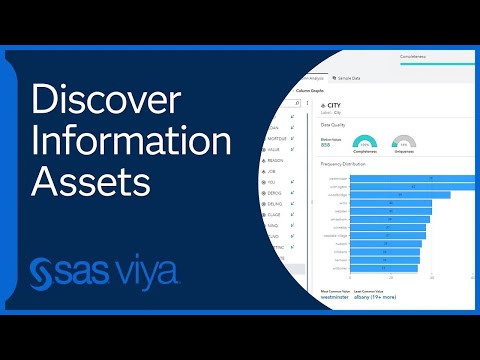
Learn how to explore data assets, create new data discovery agents, schedule data discovery agents, and much more.
Find more tutorials on the SAS Users YouTube channel.
-
5 replies
-
12-18-2019 10:20 PM
-
3246 views
-
1 like
-
2 in conversation
-


