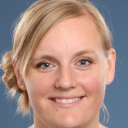
Get valuable insights and hard-won lessons from our Talent Spotlight: Miriam Kánová
Introducing Miriam Kánová, a graduate who transformed a passion for mathematics into meaningful work in clinical trials. Her research explored standardized clinical data models and the differences between R and SAS - tools at the heart of modern medical research. She now works directly with clinical data and also teaches university students, helping them see the practical side of statistics.
In this interview, Miriam reflects on her path, the mentors who shaped it, and the lessons she wishes every data-focused student knew. Explore her full Master's final thesis here.
What did you study at university, and what inspired you to choose that field?
"My learning journey turned out a little different from what I imagined. For most of my childhood, I was convinced I would end up studying medicine. But when I had to make a real decision about my future, I realized I wanted something else, and I chose mathematics and informatics instead. Math had always felt so logical and clear and at least back then, really easy for me. That’s why I decided to study Mathematics at the Faculty of Science at Masaryk University in Brno. And that’s where I discovered what “real” mathematics actually is."
What was your learning journey like?
"The first three years of my study were, to be honest, incredibly challenging. Mathematical analysis, algebra, linear algebra… and there were moments when I truly had no idea what I would ever do with all that theory.
However, the turning point came during my follow-up master’s studies in Applied Mathematics, with a specialization in Statistics and Data Analysis. That was the moment when everything finally started to make sense. I began to see the practical side of math, the real-world applications, and how data can actually be used to solve meaningful problems. What’s most interesting is that my bachelor’s and master’s theses, which focused on standardized data models in clinical studies, eventually brought me into the world of using math in medicine. So, in a way, I still ended up connected to the medical field, just from a completely different perspective."
What led you to select your thesis topic, and why did you decide to use SAS software?
"My decision to focus on this area started much earlier, when I was choosing the topic of my bachelor’s thesis. At that time, I became really interested in a topic proposed by my supervisor, doc. PaedDr. RNDr. Stanislav Katina, PhD. It was my first deeper exposure to clinical studies, as I worked with the standardized data model SDTM and learned the fundamentals of clinical research. In my bachelor’s thesis, I mainly used R, which I was much more comfortable with at that point.
When it came to selecting my master’s thesis topic, it felt natural to continue in the same direction. Together with my supervisor, we decided to focus on another standardized clinical data model, ADaM, and on statistical reporting within clinical trials. By that time, I had already gained some experience with SAS and even started using it in practice, so it made sense to include it in my master’s research.
This led us to the idea of comparing R and SAS, especially since SAS remains the leading tool in the clinical trials industry. It seemed like a practical and relevant comparison, showing where R excels and where SAS is the stronger choice."
How would you describe your experience with SAS?
"My experience with SAS was challenging at first, mainly because its structure is very different from R. But over time, as I worked with it more intensively, I became much more confident and started to understand why it is still such an important tool in the clinical environment."
When did you graduate, and what are you doing now compared to what you expected?
"I graduated in June 2024. I didn’t have any major plans for “after school,” mainly because during the last year and a half of my studies, I was already working part-time as a Data Analyst in the field of clinical trials. My only real plan was to move into a full-time position once I finished my degree and continue doing the work I was already enjoying.
A big part of why I stayed in this field were the people I met along the way, especially Radka Štěpánová, Mgr., and Mgr. Adam Svobodník, Ph.D. They were the ones who truly drew me into the world of clinical trials and showed me how meaningful this work can be.
Over almost three years of practical experience, I’ve worked with many different types of clinical data. What I enjoy the most is the feeling that what we do actually matters. And as long as I feel that sense of purpose, I’d like to stay in this field. Besides my job, I also teach. I lead tutoring sessions in Statistical Inference at the university. I genuinely enjoy teaching because it allows me to share my knowledge with students and give them a more practical perspective on statistics, which is exactly what helped me the most during my own studies."
Which skills from university do you think you’ll use most in your career, and where do you think your studies could have better prepared you?
"During my studies, I developed several skills that have become essential in my career today. One of the most important skills is my deep understanding of statistics, data, and logical thinking. Even though the study was sometimes very theoretical, I’m actually grateful for it, because it gave me a solid foundation and the ability to understand statistical concepts in detail.
Another key skill was programming in R, which helped me build a strong sense of programming logic and taught me how to approach data systematically. At the same time, I think it would have been extremely useful to have more exposure to other statistical tools, such as SAS or Python, since they are widely used in practice, especially in the clinical trials industry.
What I appreciated most during my master’s studies was the large number of projects we worked on. They taught me teamwork, responsibility sharing, communication, and how to collaborate effectively - all of which are skills I use every single day in my job."
What advice would you give to current students preparing their thesis using SAS or working on data-driven research?
"My main advice for students working with SAS or data-driven research is:
To take the process step by step and not expect everything to make sense immediately. SAS, in particular, can feel unfamiliar in the beginning, but once you understand its logic, it becomes a powerful and reliable tool.
Another important point is to really get to know your data. Don’t just focus on writing correct code; focus on understanding what the data represents, why it looks the way it does, and what story it is supposed to tell.
I’d also encourage students to be proactive: ask questions and discuss their ideas with their supervisors. Working on a thesis is much easier when you’re not doing it alone.
And finally, be patient. Working with data in general is sometimes messy and frustrating, but once everything clicks together, it feels like completing a puzzle."
Miriam’s journey from mathematics student to a data analyst in clinical research is truly inspiring. Her dedication to applying statistical knowledge in meaningful, real-world contexts reflects her passion for making an impact through data.
Want to read more stories from academic researchers shaping the future of analytics? Hardus Bodenstein | Planning for Success in Data-Driven Research and Business Follow the hashtag #TalentSpotlight for the next feature.
... View more