- Home
- /
- Administration
- /
- Admin & Deploy
- /
- Re: SAS Studio Login Failed due to excessive logs
- RSS Feed
- Mark Topic as New
- Mark Topic as Read
- Float this Topic for Current User
- Bookmark
- Subscribe
- Mute
- Printer Friendly Page


- Mark as New
- Bookmark
- Subscribe
- Mute
- RSS Feed
- Permalink
- Report Inappropriate Content
Hello,
Running SAS v9.4 (TS1M5)
Studio is Release: 3.71 (Enterprise Edition)
We recently had an issue with users who could not login to SAS Studio due to insufficient space in /sasconfig. SAS support helped us correct the issue, which was excessive log build up in several subdirectories under /sasconfig. While I understand that it is important to have logs for numerous reasons, there doesn't appear to be a uniform process for cleaning out and/or archiving those logs using a management tool that could be based on date (e.g., delete if file date > 30 days from today) or other filters.
To this end, I'm planning to develop a Unix system script with our Sys Admin to parse through the directories that SAS Support recommended for clean-up. My current plan is to run this quarterly in crontab as sasinst and use a 30 day filter as mentioned above.
Has anyone else had to go through this? Any helpful hints? Are there any other methods for doing this that I haven't thought about?
Thanks for your time!


- Mark as New
- Bookmark
- Subscribe
- Mute
- RSS Feed
- Permalink
- Report Inappropriate Content
- Mark as New
- Bookmark
- Subscribe
- Mute
- RSS Feed
- Permalink
- Report Inappropriate Content


- Mark as New
- Bookmark
- Subscribe
- Mute
- RSS Feed
- Permalink
- Report Inappropriate Content
I have created a script (on AIX) to clear most of this out on a monthly basis. The script is run on every 28th of a month, so it more or less uses a similar window:
ARCFILE=/home/root/log/filelist_sasconf_`/usr/linux/bin/date +%Y%m`
echo > $ARCFILE
DATUM=`/usr/linux/bin/date --date="1 month ago" +%Y-%m`
rm -r /sasconf/Lev1/Backup/Results/${DATUM}*
rm -r /sasconf/Lev1/Backup/Logs/${DATUM}*
find /sasconf -name \*${DATUM}\* >> $ARCFILE
DATUM=`/usr/linux/bin/date --date="1 month ago" +%Y%m`
find /sasconf -name \*${DATUM}\* >> $ARCFILE

dsmc archive -filelist=$ARCFILE -deletefiles description="XXXXX" >> /home/root/log/archive_sasconf.log
It uses both date-stamp formats found in SAS log files; some of the files are simply removed (because irrelevant), and some are moved to the long-time archive. The final command starts the commandline client of IBM Tivoli Storage Manager (TSM).
- Mark as New
- Bookmark
- Subscribe
- Mute
- RSS Feed
- Permalink
- Report Inappropriate Content
- Mark as New
- Bookmark
- Subscribe
- Mute
- RSS Feed
- Permalink
- Report Inappropriate Content
- Mark as New
- Bookmark
- Subscribe
- Mute
- RSS Feed
- Permalink
- Report Inappropriate Content
Use the {i} button for posting such scripts. This usually keeps the original format.
If it still fails to keep the linefeeds, open the script file with notepad++ or similar and do a copy/paste from there.
- Mark as New
- Bookmark
- Subscribe
- Mute
- RSS Feed
- Permalink
- Report Inappropriate Content
- Mark as New
- Bookmark
- Subscribe
- Mute
- RSS Feed
- Permalink
- Report Inappropriate Content
# Run SAS services status command  ---  Send output to script log for delivery once completed
/sasconfig/Lev1/sas.servers status

# Run SAS services stop command  ---  Send output to script log for delivery once completed
/sasconfig/Lev1/sas.servers stop

echo 'CleanUp_Studio_Web_Logs.scr'
echo
echo 'Cleaning -- /sasconfig/Lev1/Web/WebAppServer/SASServer1_1/'
echo
find /sasconfig/Lev1/Web/WebAppServer/SASServer1_1/logs/ -mtime +30 -print0 | xargs -0 rm -f -v
find /sasconfig/Lev1/Web/WebAppServer/SASServer1_1/work/ -mtime +30 -print0 | xargs -0 rm -f -v
find /sasconfig/Lev1/Web/WebAppServer/SASServer1_1/temp/* -print0 | xargs -0 rm -r -f -v
find /sasconfig/Lev1/Web/WebAppServer/SASServer1_1/work/Catalina/localhost/* -print0 | xargs -0 rm -r -f -v
echo
echo 'Cleaning -- /sasconfig/Lev1/Web/WebAppServer/SASServer11_1/'
echo
find /sasconfig/Lev1/Web/WebAppServer/SASServer11_1/logs/ -mtime +30 -print0 | xargs -0 rm -f -v
find /sasconfig/Lev1/Web/WebAppServer/SASServer11_1/work/ -mtime +30 -print0 | xargs -0 rm -f -v
find /sasconfig/Lev1/Web/WebAppServer/SASServer11_1/temp/* -print0 | xargs -0 rm -r -f -v
find /sasconfig/Lev1/Web/WebAppServer/SASServer11_1/work/Catalina/localhost/* -print0 | xargs -0 rm -r -f -v
echo
echo 'Cleaning -- /sasconfig/Lev1/Web/WebAppServer/SASServer2_1/'
echo
find /sasconfig/Lev1/Web/WebAppServer/SASServer2_1/logs/ -mtime +30 -print0 | xargs -0 rm -f -v
find /sasconfig/Lev1/Web/WebAppServer/SASServer2_1/work/ -mtime +30 -print0 | xargs -0 rm -f -v
find /sasconfig/Lev1/Web/WebAppServer/SASServer2_1/temp/* -print0 | xargs -0 rm -r -f -v
find /sasconfig/Lev1/Web/WebAppServer/SASServer2_1/work/Catalina/localhost/* -print0 | xargs -0 rm -r -f -v
echo
echo 'Cleaning -- /sasconfig/Lev1/Web/WebServer/logs/'
echo
find /sasconfig/Lev1/Web/WebServer/logs/ -mtime +30 -print0 | xargs -0 rm -f -v
echo
echo 'Cleaning -- /sasconfig/Lev1/Web/gemfire/instances/ins_41415/  --> *.log  &  *.dat'
echo
find /sasconfig/Lev1/Web/gemfire/instances/ins_41415/*.log -mtime +30 -print0 | xargs -0 rm -f -v
find /sasconfig/Lev1/Web/gemfire/instances/ins_41415/*.dat -mtime +30 -print0 | xargs -0 rm -f -v
echo
echo 'Cleaning -- /sasconfig/Lev1/Web/activemq/data/'
echo
find /sasconfig/Lev1/Web/activemq/data/* -print0 | xargs -0 rm -r -f -v
echo
echo 'Cleaning -- /sasconfig/Lev1/Web/Logs/SASServer1_1/  ../SASServer11_1/  ../SASServer2_1/'
echo
find /sasconfig/Lev1/Web/Logs/SASServer1_1/* -mtime +30 -print0 | xargs -0 rm -f -v
find /sasconfig/Lev1/Web/Logs/SASServer11_1/* -mtime +30 -print0 | xargs -0 rm -f -v
find /sasconfig/Lev1/Web/Logs/SASServer2_1/* -mtime +30 -print0 | xargs -0 rm -f -v
echo
echo 'I Declare These Directories Cleansed'
echo

# Run SAS services start command  ---  Send output to script log for delivery once completed
/sasconfig/Lev1/sas.servers start

# Run SAS services status command  ---  Send output to script log for delivery once completed
/sasconfig/Lev1/sas.servers status
Yep, {i} works. Opened the .txt with PSPad and did a copy/paste.

- Spring 2026 ESUG Meeting - Social Celebration | 02-Jun-2026
- Spring 2026 ESUG Meeting | 03-Jun-2026
- Ask the Expert: Fast, Clear, Beautiful: Your First Steps With PROC SGPLOT | 04-Jun-2026
- Ask the Expert: R and SAS Working Seamlessly Together: Unlocking PROC R in Viya for Life Sciences | 11-Jun-2026
- Ask the Expert: Can Agents Reduce Planning Friction in CPG Supply Chains? | 16-Jun-2026
- Ask the Expert: Get Meaningful Results With New Features in SAS Customer Intelligence 360 | 25-Jun-2026
Learn how to explore data assets, create new data discovery agents, schedule data discovery agents, and much more.
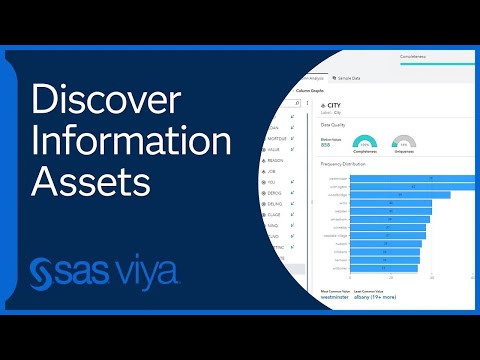
Find more tutorials on the SAS Users YouTube channel.
-
8 replies
-
09-30-2019 10:25 AM
-
3699 views
-
0 likes
-
3 in conversation
-


