- Home
- /
- Programming
- /
- SAS Studio
- /
- Re: Every time I try to make a permanent data set I get a library does...
- RSS Feed
- Mark Topic as New
- Mark Topic as Read
- Float this Topic for Current User
- Bookmark
- Subscribe
- Mute
- Printer Friendly Page


- Mark as New
- Bookmark
- Subscribe
- Mute
- RSS Feed
- Permalink
- Report Inappropriate Content
I am working in SAS on demand.
This is the code I used. I have tried many different cases for the library and data set names, and nothing seems to work. I briefly got it to work yesterday, and I could see the data set in the mydata library, but then it disappeared this morning and I can't seem to make anything work. Is it just not possible to save data sets in SAS on demand?
LIBNAME mydata 'C:\MYDATA';
data mydata.trial;
input name $ sex $ age;
label name = "first name"
sex = "birth sex";
cards;
kristin 2 54
stacy 1 56
;
run;
proc print data= mydata.trial label;
run;


- Mark as New
- Bookmark
- Subscribe
- Mute
- RSS Feed
- Permalink
- Report Inappropriate Content
Are you running this in SAS/Studio? If so, SAS/Studio cannot access files or folders on your local computer's hard drives.
You have to create libraries on the server where SAS/Studio is running. You mentioned SAS On Demand, here is how I use the LIBNAME statement
libname mydata "/home/paige.miller3";

data mydata.class;
	set sashelp.class;
run;
Of course, you would have to use a different folder than PAIGE.MILLER3, it has to be a folder the exists in your SAS On Demand.
Paige Miller


- Mark as New
- Bookmark
- Subscribe
- Mute
- RSS Feed
- Permalink
- Report Inappropriate Content
With SAS On Demand, the actual SAS process (which you access through the SAS Studio web application) runs on a Linux-based cloud server. You must use UNIX-style syntax for file and path names. UNIX does not have drive letters, but a single directory tree which starts at "root", symbolized by a slash. You "own" your home directory, and the system provides a shortcut to it, symbolized by a tilde. So if you created a directory/folder called mydata in your home folder in the Studio navigation tab, in your code you would use
libname mydata "~/mydata";Also note that UNIX operating systems are case sensitive, mydata and Mydata would be different objects.
In the future, always post the complete log of code that fails by copy/pasting the text into a window opened with this button:

The log is our primary diagnostic tool, see Maxim 2.

Catch up on SAS Innovate 2026
Nearly 200 sessions are now available on demand with the SAS Innovate Digital Pass.
Explore Now →Get started using SAS Studio to write, run and debug your SAS programs.
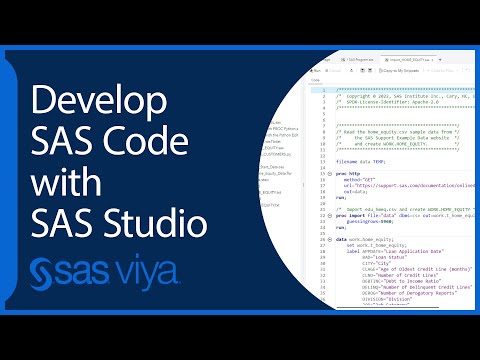
Find more tutorials on the SAS Users YouTube channel.
SAS Training: Just a Click Away
Ready to level-up your skills? Choose your own adventure.
-
2 replies
-
03-31-2026 02:12 PM
-
360 views
-
0 likes
-
3 in conversation
-


