- Home
- /
- Programming
- /
- SAS Studio
- /
- ERROR: Unresolved reference to table/correlation name class1.
- RSS Feed
- Mark Topic as New
- Mark Topic as Read
- Float this Topic for Current User
- Bookmark
- Subscribe
- Mute
- Printer Friendly Page


- Mark as New
- Bookmark
- Subscribe
- Mute
- RSS Feed
- Permalink
- Report Inappropriate Content


- Mark as New
- Bookmark
- Subscribe
- Mute
- RSS Feed
- Permalink
- Report Inappropriate Content
If you have previously defined CLASS1 in a LIBNAME statement, then you want
group by mismatches1.product_id
or, since there is only one data set mentioned in the FROM clause, you could also use
group by product_id
Paige Miller
- Mark as New
- Bookmark
- Subscribe
- Mute
- RSS Feed
- Permalink
- Report Inappropriate Content
Hello,
I have tried with both of them ,yes i have used class1 ref in libname before.
- Mark as New
- Bookmark
- Subscribe
- Mute
- RSS Feed
- Permalink
- Report Inappropriate Content
- Mark as New
- Bookmark
- Subscribe
- Mute
- RSS Feed
- Permalink
- Report Inappropriate Content
I have tried with both of them ,yes i have used class1 ref in libname before.
Show us the entire SAS log of what you have tried. Click on the {i} icon and paste the log into the window that appears (do not show us the log any other way).
Paige Miller
- Mark as New
- Bookmark
- Subscribe
- Mute
- RSS Feed
- Permalink
- Report Inappropriate Content
- Mark as New
- Bookmark
- Subscribe
- Mute
- RSS Feed
- Permalink
- Report Inappropriate Content
So you have not defined CLASS1 in a LIBNAME statement? There is no LIBNAME in your log.
When you show us the log, you need to click on the {i} and paste the log into that window. Do not show us logs any other way.
Paige Miller
- Mark as New
- Bookmark
- Subscribe
- Mute
- RSS Feed
- Permalink
- Report Inappropriate Content
- Mark as New
- Bookmark
- Subscribe
- Mute
- RSS Feed
- Permalink
- Report Inappropriate Content
Hi, we are trying to help you, but you have to help us. Logs must be pasted into the window that appears when you click on the {i} icon.
Paige Miller


- Mark as New
- Bookmark
- Subscribe
- Mute
- RSS Feed
- Permalink
- Report Inappropriate Content
@Shrutibhatnagar wrote:
1 OPTIONS NONOTES NOSTIMER NOSOURCE NOSYNTAXCHECK;7273 proc sql;74 select product_id ,count(product_id)75 from class1.mismatches176 group by class1.product_id77 having count(product_id) >1 ;ERROR: Unresolved reference to table/correlation name class1.NOTE: PROC SQL set option NOEXEC and will continue to check the syntax of statements.78 quit;
Except in the FROM clause a reference like ABC.PDQ means that ABC is a data set reference or alias and PDQ is the variable named PDQ in the data set ABC.
So your statement
76 group by class1.product_id
is attempting to reference a dataset named class1 that has not been defined. If you want to use the variable Product_id that comes from the data set class1.mismatches1 then only use
group by product_id
You can create an alias to data set by
from library.dataset <as> abc
the as is optional but I normally use it to keep the intent clearer.
Then to reference a variable in the dataset library.dataset you use abc.varname.
This is mostly import when two or more data sets are used in a single proc sql statement and especially when two or more sets have a same named variable to reference which data set you want to contribute the value.

Catch up on SAS Innovate 2026
Dive into keynotes, announcements and breakthroughs on demand.
Explore Now →Get started using SAS Studio to write, run and debug your SAS programs.
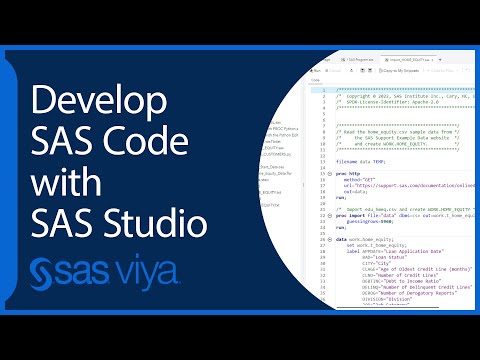
Find more tutorials on the SAS Users YouTube channel.
SAS Training: Just a Click Away
Ready to level-up your skills? Choose your own adventure.
-
9 replies
-
04-02-2019 12:58 PM
-
6220 views
-
0 likes
-
3 in conversation
-


