You are invited to join the upcoming DCSUG webinar titled, "SAS OnDemand: The Easy Way to Learn SAS for Free for Students, Educators, and Independent Learners"
Dec. 11, 20205
10:30-11:30AM ET
Register today!
Abstract:
SAS OnDemand for Academics (ODA) is free cloud-based software anyone can use to learn SAS programming. ODA offers the latest SAS 9.4 software for data manipulation and cutting-edge analytics through the SAS Studio programming interface. Point-and-click SAS Studio tasks can additionally be used to automatically generate code. In this session, we will walk through a guided demonstration of SAS OnDemand for Academics including an example data analysis and concluding with resources for further training.
Register for SAS OnDemand for Academics at http://welcome.oda.sas.com. Detailed registration instructions are available here. Other helpful resources include instructions for updating your own data, the ODA Frequently Asked Questions page, and the ODA general support page.
Presenter:
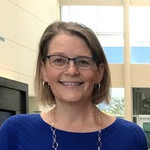
Jackie Johnson, Principal Analytical Training Consultant at SAS
Jacqueline Johnson is a principal analytical training consultant in Global Academic Programs at SAS. In her role at SAS, she conducts SAS software training at academic campuses around the country and works with faculty to support efforts to develop the future analytics workforce. She holds a DrPH in Biostatistics from UNC Chapel Hill. Prior to SAS, Dr. Johnsonâs career has focused on statistical analyses of clinical trials data and includes working as a biostatistics faculty in an academic medical school and as a biostatistician in the pharmaceutical industry. She has been teaching with SAS in commercial and academic settings for over 15 years.âŻ
Please share /forward this email to all who can benefit or find it to be of good informational use.
... View more
I am excited to share with you the recording of today's NJSUG webinar. During this one-hour webinar, you see two presentations:
Presentation #1: Prompt, Program, Submit: Generative AI for Faster SDTM, ADaM, and TLFs
The life sciences industry is seeing more requests for quick, compliant clinical trial submissions, which makes it even more important to improve programming operations. Generative artificial intelligence (GenAI), especially large language models (LLMs), could change the way SDTM, ADaM, and TLFs are created in a big way.
This presentation will investigate the practical applications of GenAI to automate and enhance critical clinical programming duties. From the mapping of raw data to SDTM domains, to the crafting of ADaM specifications, and the generation of common code or statistical summaries, we will analyze real-world use cases. These examples will demonstrate how to reduce manual effort while ensuring traceability and compliance. Additionally, we will illustrate the integration of these AI-driven procedures into environments to improve productivity without compromising regulatory compliance.
Whether you are a statistical programmer, data manager, or biostatistician, this presentation will help you reimagine what is possible when human expertise meets machine intelligence.
Bio: Matt Becker is an Advisory Industry Consultant with the SAS Health and Life Science division. Mattâs more than 30 years of life science experience includes over 8 years with SAS concentrating on next generation clinical trials, data management, analysis, advanced analytics, and deployment options in Life Science.
Presentation #2: Composing Better Clinical Outputs
Symphony is a web application designed to simplify the creation and management of both mock shells and final outputs for tables, figures, and listings (TFLs). Unlike static Word documents, Symphony streamlines the design, review, and standardization processes by providing a centralized platform that seamlessly connects conceptualization to computation.
Using reusable, standardized analysis blocks, Symphony automatically generates both mock shells and final outputs, ensuring alignment between specifications and results. The application enforces the creation and reuse of CDISC ADaM metadata, supports the integration of Analysis Results Metadata (ARM), and enables the export of code for full reproducibility. Symphony also includes features for validation tracking, versioning, and metrics, ensuring transparency, traceability, and efficiency throughout the clinical reporting process.
By centralizing metadata, enforcing standards, and maintaining a direct link between design and execution, Symphony enhances quality, increases transparency, and accelerates timelines for clinical reporting.
Bio: Karma Tarap is a seasoned professional with 20 years of experience in the pharmaceutical industry, specializing in innovation within statistical programming. With degrees in immunology, microbiology, bioinformatics, and data science, he brings a unique blend of expertise to his work.
... View more
In case you missed it, @ChrisHemedinger posted a topic outlining the content that was submitted for SAS Innovate: Compelling content coming in for SAS Innovate 2026. If programming and SAS 9 is your jam, there were numerous entries in those categories. You won't be disappointed with the presentations next year!
Registration is open now, with early pricing through Dec. 31, 2025. I hope to see you there!
... View more
Wow - what a day it was! đ€ Thank you to everyone who joined us at The Moth Cafe for a morning of learning, conversations, and coffee. â We had a great time connecting with all of you. We hope you found the day valuable.
Here was the agenda for the day for reference:
8:30am - 9:00am
Breakfast Buffet and Registration
9:00am - 9:05am
Welcome Remarks
9:05am - 9:20am
What's New at SAS? Alice Yuan, SAS Canada
9:20am - 9:45am
Assessment $ Change for Designated Industrial Properties (DIP), Definition, Methodology, and Reporting Gavin (Shitang) Ding & Yiming Zhu, Government of Alberta
9:45am - 10:30am
Operational Forecasting in Healthcare Lorne Rothman (@CanLdr), SAS Canada
Operational time series forecasting uses historical data to forecast future operational needs. It enables organizations and facilities to anticipate future demand to optimize resource allocation, staffing, and budget for capacity planning. We will explore some examples from healthcare using SAS Viya forecasting, designed for mass, automated forecasting of many times series using statistical and machine learning models.
10:30am - 11:10am
Networking Break & Snacks
11:10am - 11:50am
State of AI & Open Discussion: All Things AI Moderated by SAS Canada experts
What are you doing with AI? What do you hope to do with AI? Let's share our ideas in this discussion time.
11:50am - 12:00pm
Closing Remarks
The presentations are attached in this post.
You can find the The Data and AI Impact Report that was mentioned in the discussion time here.
For those looking for more resources on GenAI, here is the SAS information page. You will find helpful industry information and resources to get you started.
SAS also offers a Generative AI Using SAS course via Coursera.
We hope to see you again at our next meeting in Spring 2026! đ
... View more