- RSS Feed
- Mark Topic as New
- Mark Topic as Read
- Float this Topic for Current User
- Bookmark
- Subscribe
- Mute
- Printer Friendly Page


- Mark as New
- Bookmark
- Subscribe
- Mute
- RSS Feed
- Permalink
- Report Inappropriate Content
Hi,
I've unique ID table include 90k rows. I want to filter ID's in oracle table. This table is quite huge approximately 100 Mio. I don't know exact observations because i guess proc contents can not show oracle table observation or index column.
By the way, i can't use libname oracle because i dont know password or username so i cant use pass through sql.
I tried below code but its running so slow. What should I do that make it faster?
DATA _NULL_;
SET UNIQUE_ID_TABLE END=EOF;
IF _N_=1 THEN DO;
CALL EXECUTE("PROC SQL _METHOD;");
CALL EXECUTE("CREATE TABLE WANT AS");
CALL EXECUTE("SELECT * FROM ORACLE_TABLE");
CALL EXECUTE("WHERE ID IN ");
CALL EXECUTE("(");
END;
CALL EXECUTE(QUOTE(STRIP(ID)));
IF EOF THEN DO;
CALL EXECUTE(");");
CALL EXECUTE("QUIT;");
END;
RUN;
Accepted Solutions


- Mark as New
- Bookmark
- Subscribe
- Mute
- RSS Feed
- Permalink
- Report Inappropriate Content
Its very hard to debug two systems and their interactions with no information. A tip which might help:
Load the small table from SAS into a temporary area on the database. Then execute the query fully on the database.
You will have a temporary area if you have an account on the DB presumably, but you will need to contact your system admin to help. Much the same as pass-through, if you can't do this, then you are rate limited by the speed of transferring data back and forth across networks, which will always be slow. And a 100million records is quite a lot.


- Mark as New
- Bookmark
- Subscribe
- Mute
- RSS Feed
- Permalink
- Report Inappropriate Content
So how do you access Oracle if you don't have a user name and a password?
- Mark as New
- Bookmark
- Subscribe
- Mute
- RSS Feed
- Permalink
- Report Inappropriate Content
Sorry for late response,
There is a generic user that created by SAS system admin and this is a oracle library when i connect SAS Server.
I use SAS EG 7.1 I can use proc sql with basic queries with these oracle tables. I try to figure out password information with SASTRACE system option but it didn't work.
So simply, when i use these oracle tables, sas know this password but i don't 🙂
- Mark as New
- Bookmark
- Subscribe
- Mute
- RSS Feed
- Permalink
- Report Inappropriate Content
Its very hard to debug two systems and their interactions with no information. A tip which might help:
Load the small table from SAS into a temporary area on the database. Then execute the query fully on the database.
You will have a temporary area if you have an account on the DB presumably, but you will need to contact your system admin to help. Much the same as pass-through, if you can't do this, then you are rate limited by the speed of transferring data back and forth across networks, which will always be slow. And a 100million records is quite a lot.


- Mark as New
- Bookmark
- Subscribe
- Mute
- RSS Feed
- Permalink
- Report Inappropriate Content
The simplest is to actually join those tables directly. Then you could use the DBKEY= option, which will behind the scenes issue a dynamic where in().
You can use
options msglevel = I sastraceloc = saslog sastrace = ',,,d' nostsuffix;
to monitor what the libname engine sends to Oracle.
If this path is not feasible, revert to @RW9 suggestion of uploading your id data set.
- Mark as New
- Bookmark
- Subscribe
- Mute
- RSS Feed
- Permalink
- Report Inappropriate Content
I just want to do filter huge table with only getting my ID's. Firstly, i tried macro variable but it's exceed macro variables capacities. So i discovered the call execute method thanks to sas communities.
Add your system option's code and then log likes below,
ORACLE_4: Prepared: on connection 3
SELECT * FROM ORACLE_TABLE but different first name*.(Names with generic username for oracle connection)
ORACLE_5: Prepared: on connection 3
SELECT VAR1,VAR2 ... VAR15 FROM ORACLE_TABLE WHERE ( ("ID IN ( ID1 , ID2 ,ID3 ) ) ) because i tried only three ID.
ORACLE_6: Executed: on connection 3
SELECT statement ORACLE_5

Call for content now open!
It's your turn to help shape SAS Innovate 2027. Share your expertise and inspire the SAS community.
- Ask the Expert: SAS Functions That Put the "FUN" in Programming | 06-Oct-2026
- PhilaSUG & NJSUG Joint In-Person Meeting 2026 | 09-Oct-2026
- North Texas SAS User Group (NoTSUG) Fall Meeting | 09-Oct-2026
- Ask the Expert: How Can I Integrate SAS® Viya® With Microsoft 365? | 13-Oct-2026
- Ask the Expert: Map to Success: Using ODS Graphics for Data Visualization | 15-Oct-2026
- Southeast & Atlantic SAS Users Group Conference | 22-Oct-2026
- Ask the Expert: Getting Started With SAS Visual Analytics: Build Your First Dashboard | 22-Oct-2026
SAS' Charu Shankar shares her PROC SQL expertise by showing you how to master the WHERE clause using real winter weather data.
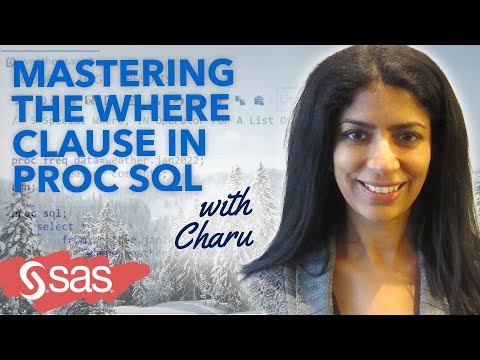
Find more tutorials on the SAS Users YouTube channel.
-
5 replies
-
10-17-2018 04:39 AM
-
5359 views
-
2 likes
-
4 in conversation
-


