- Home
- /
- Analytics
- /
- Stat Procs
- /
- Growth rate
- RSS Feed
- Mark Topic as New
- Mark Topic as Read
- Float this Topic for Current User
- Bookmark
- Subscribe
- Mute
- Printer Friendly Page


- Mark as New
- Bookmark
- Subscribe
- Mute
- RSS Feed
- Permalink
- Report Inappropriate Content
Hello
I have an example and I am not sure how to handle with the data
| Firm | Sales | Year | Change |
| A | 120 | 2007 | -8% |
| A | 130 | 2006 | -7% |
| A | 140 | 2005 | |
| B | 15 | 2006 | 25% |
| B | 12 | 2005 | 20% |
| B | 10 | 2004 |
Should I use Lines A-2005 and B-2004 in column "change" as 0 or missing data?
Thanks a lot!
Accepted Solutions


- Mark as New
- Bookmark
- Subscribe
- Mute
- RSS Feed
- Permalink
- Report Inappropriate Content
Either,
Change = (Sales(y) - Sales(y-1)) / Sales(y-1);
if Sales(y-1) is unknown (missing) then Change should be missing.
if Sales(y-1) is zero (new product, new company) then change should be +Infinity


- Mark as New
- Bookmark
- Subscribe
- Mute
- RSS Feed
- Permalink
- Report Inappropriate Content
I would say it would depend on what your are going to do with that change variable later. If I wanted average change rate from year to year I would not want the value to be 0 as you would end up with an n of 3 and (0 + -7 + -8)/3 would notably different from the apparent -7.5% change average. (Noting that averaging percents is a dangerous activity in general).
But for some modely I may need a 0 as a baseline.
- Mark as New
- Bookmark
- Subscribe
- Mute
- RSS Feed
- Permalink
- Report Inappropriate Content
Either,
Change = (Sales(y) - Sales(y-1)) / Sales(y-1);
if Sales(y-1) is unknown (missing) then Change should be missing.
if Sales(y-1) is zero (new product, new company) then change should be +Infinity

Call for content now open!
It's your turn to help shape SAS Innovate 2027. Share your expertise and inspire the SAS community.
ANOVA, or Analysis Of Variance, is used to compare the averages or means of two or more populations to better understand how they differ. Watch this tutorial for more.
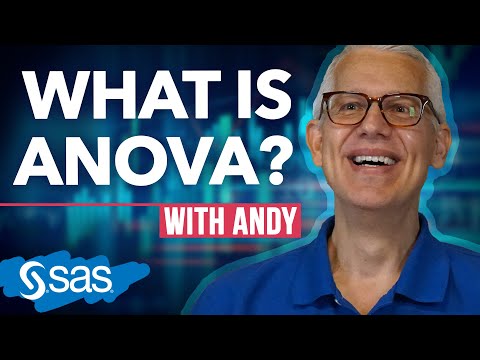
Find more tutorials on the SAS Users YouTube channel.
-
2 replies
-
08-29-2016 01:06 PM
-
3689 views
-
0 likes
-
3 in conversation
-

